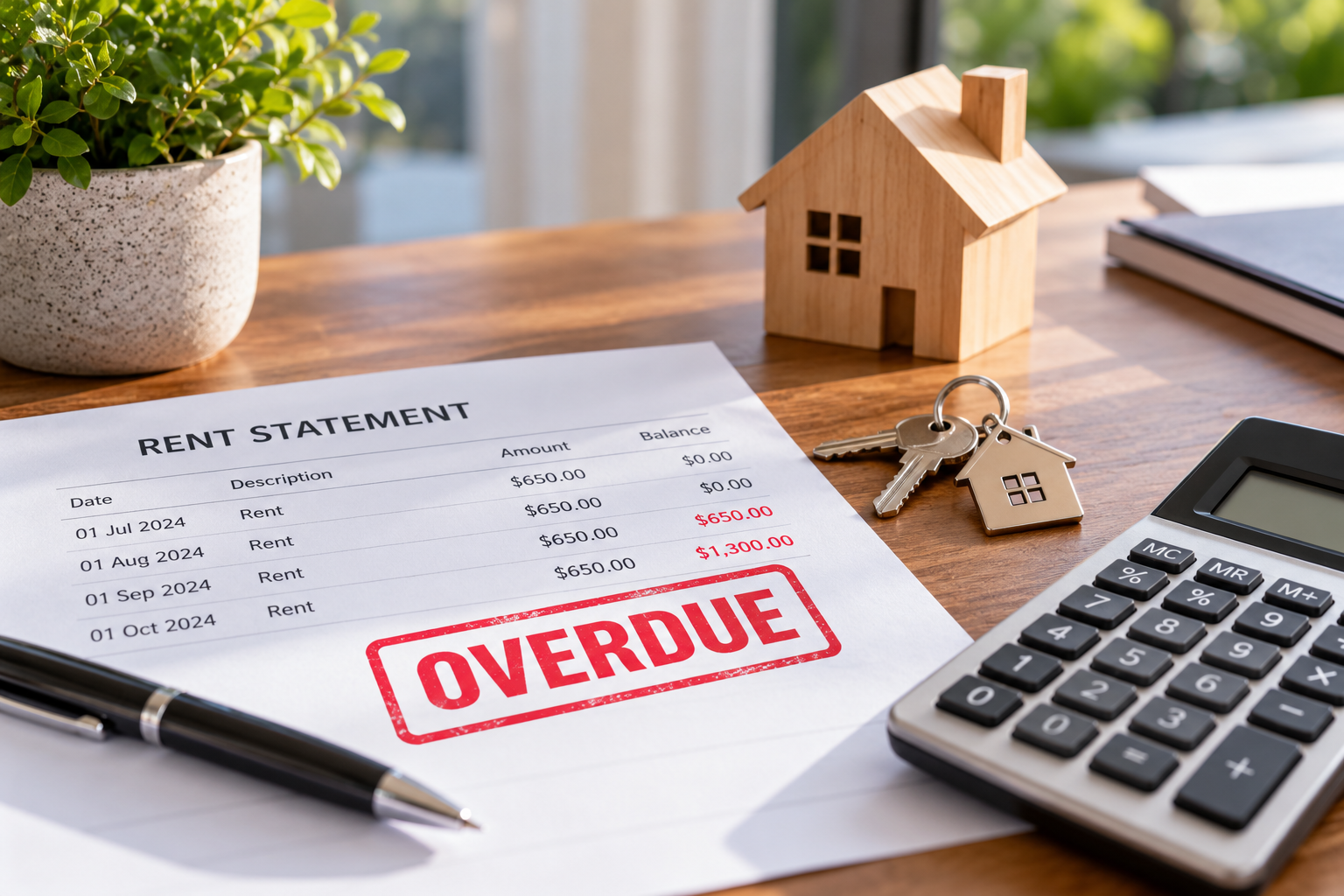
Late rental payments can be frustrating for property owners, particularly when rental income is needed to cover mortgage repayments, council rates and other property expenses.
While occasional payment delays may occur, ongoing rent arrears can create financial pressure and uncertainty for landlords.
In Queensland, there are specific legal procedures that property managers and landlords must follow when tenants fall behind in rent.
Understanding these procedures, together with proactive property management and appropriate insurance protection, can help property owners minimise financial risks and avoid unnecessary disputes.
Here are nine common questions Brisbane landlords ask about managing rent arrears.
1. When is rent considered overdue in Queensland?
In Queensland, rent is considered overdue when a tenant fails to pay the full amount by the agreed due date.
For example, if rent is due on Monday and payment has not been made, the tenant is one day in arrears on Tuesday.
However, being one day behind does not mean a landlord can immediately issue a formal breach notice.
For general residential tenancies, a Notice to Remedy Breach (Form 11) can generally be issued once the tenant is more than seven days behind in rent.
Before taking formal action, landlords should ensure their rental records are accurate and allow for any payments that may still be processing.
2. What should I do when my tenant first falls behind in rent?
Early communication is often the most effective way to prevent a small rental debt from becoming a larger problem.
When rent becomes overdue, the property manager or landlord should contact the tenant promptly to confirm whether payment has been made.
Sometimes, late payments result from simple oversights, banking delays or temporary financial difficulties.
A practical approach may include:
Sending a polite rent reminder.
Confirming the outstanding rental amount.
Asking the tenant when payment will be made.
Keeping written records of communication.
Monitoring the rental ledger to ensure payments are received.
Addressing rent arrears early can help maintain a positive tenancy relationship while protecting the owner’s financial interests.
3. When can I issue a Notice to Remedy Breach in Queensland?
For general residential tenancies in Queensland, a landlord or property manager can generally issue a Notice to Remedy Breach (Form 11) when the tenant is more than seven days behind in rent.
The notice formally advises the tenant that they have breached the tenancy agreement by failing to pay rent.
The tenant must be given seven days to remedy the breach by paying the outstanding amount.
If the tenant pays the required arrears within the notice period, the tenancy can continue.
It is important to calculate the outstanding rent accurately and ensure the notice is completed and served correctly.
Incorrect notices or notice periods may delay further action.
4. What happens if the tenant does not pay after receiving a breach notice?
If the tenant fails to remedy the rent arrears within the required seven-day period, the landlord or property manager may issue a Notice to Leave (Form 12).
For an unremedied rent arrears breach under a general residential tenancy agreement, the minimum notice period is seven days.
This notice requires the tenant to vacate the property by the specified handover date.
However, issuing a Notice to Leave does not give the landlord the right to immediately remove the tenant or change the locks.
If the tenant refuses to leave, the landlord or property manager may need to apply to the Queensland Civil and Administrative Tribunal (QCAT) for a termination order and warrant of possession.
The application must generally be made within 14 days after the Notice to Leave expires.
Following the correct legal process is essential to avoid further complications.
5. What if my tenant repeatedly pays rent late but eventually catches up?
Repeated late payments can be particularly frustrating for landlords.
Some tenants may pay the outstanding amount after receiving a breach notice but fall behind again shortly afterwards.
Although the immediate breach may be resolved, the pattern can create ongoing uncertainty for property owners.
One practical solution is to discuss a payment arrangement that helps the tenant return to a consistent rental payment schedule.
For example, a tenant who regularly falls behind may voluntarily agree to make additional payments over time to clear any arrears.
Landlords should also understand that Queensland tenancy legislation contains provisions relating to repeated breaches.
In certain circumstances, where two previous notices have been issued and remedied, a third breach of the same type within a 12-month period may provide grounds to apply to QCAT for termination.
However, termination is not automatic, and QCAT will consider the circumstances and seriousness of the breaches.
6. Can I ask my tenant to pay an extra week of rent to avoid falling behind again?
Landlords and property managers can discuss voluntary payment arrangements with tenants to help prevent recurring rent arrears.
For example, if a tenant regularly struggles to pay rent on time, they may agree to make additional payments to bring their rental account up to date.
Some tenants may also prefer to maintain their rental payments ahead of the due date to reduce the risk of future delays.
However, Queensland rental laws place restrictions on requiring rent to be paid in advance.
For general residential tenancies, landlords generally cannot require tenants to pay more than two weeks’ rent in advance or demand further rent before the required advance payment period has been used.
Any additional payment arrangement should therefore be voluntary and comply with Queensland tenancy legislation.
The goal should be to establish a manageable payment routine rather than create further financial pressure.
7. Can I use the rental bond to cover unpaid rent?
A rental bond provides financial security for landlords if a tenant fails to meet certain obligations under the tenancy agreement.
At the end of a tenancy, outstanding rent may be claimed from the rental bond.
However, landlords cannot simply withdraw bond money during an ongoing tenancy to cover missed rental payments.
Bond refunds and disputes must follow the procedures administered by the Residential Tenancies Authority (RTA).
If the outstanding rent exceeds the available bond, the landlord may need to pursue the remaining amount through the appropriate dispute resolution or legal process.
Keeping accurate rental ledgers and payment records is particularly important when making a claim for unpaid rent.
8. How can a good property manager help prevent rent arrears?
A good property manager does more than collect rent and issue breach notices when payments are overdue.
One of their most important responsibilities is to monitor rental payments closely and identify potential problems before they become serious.
Effective rent arrears management should be proactive rather than reactive.
Regular rent monitoring
A professional property manager should regularly review rental payment records to identify overdue rent as early as possible.
Rather than waiting until a tenant is significantly behind, they can monitor how many days the rent is overdue and take appropriate action.
Early reminders and follow-up
When rent becomes overdue, a property manager can promptly contact the tenant through email, text message or telephone.
These reminders help tenants understand their outstanding balance and encourage them to make payment before the situation escalates to a formal Notice to Remedy Breach.
Understanding the reason for late payments
Not every late payment is caused by an irresponsible tenant.
Sometimes, tenants experience unexpected financial difficulties, such as job loss, reduced working hours, illness or family emergencies.
A good property manager takes the time to understand the circumstances rather than simply sending repeated notices.
Helping tenants find practical solutions
When a tenant is experiencing temporary financial difficulties, a property manager can communicate with both the tenant and landlord to explore reasonable solutions.
This may include discussing a manageable repayment arrangement, adjusting payment dates by agreement or helping the tenant understand available support options.
Any arrangement should comply with Queensland tenancy laws and be clearly documented.
Keeping landlords informed
Property managers should keep property owners informed about significant rental arrears, tenant communication and any proposed payment arrangements.
This allows landlords to make informed decisions while avoiding unnecessary involvement in day-to-day payment follow-ups.
Taking timely action when necessary
While early communication is important, a property manager must also recognise when informal reminders are no longer effective.
If rent remains unpaid, they should follow the appropriate legal procedures within the required timeframes.
The goal is not simply to issue notices, but to resolve payment problems as early as possible while protecting the landlord’s interests.
9. Should landlords have insurance to protect against unpaid rent?
Even tenants with an excellent rental history can experience unexpected financial difficulties.
A tenant who has paid rent consistently for several years may suddenly lose their job, experience a serious illness or face other circumstances that affect their ability to meet rental payments.
Unfortunately, careful tenant selection and professional property management cannot eliminate every financial risk.
This is why landlords should consider appropriate landlord insurance.
Depending on the policy, landlord insurance may provide protection against certain rental losses, tenant-related damage and other unexpected events.
However, not all landlord insurance policies automatically cover rent arrears or rental default.
Landlords should carefully review their insurance policy to understand:
Whether tenant rental default is covered.
What circumstances qualify for a claim.
Any waiting periods or excess payments.
The maximum amount of rental loss covered.
The documentation and notification requirements for making a claim.
A professional property manager can also play an important role when an insurance claim becomes necessary.
By maintaining accurate rental ledgers, tenancy records, correspondence and breach notices, they can help landlords gather the documentation required by their insurer.
They can also assist with providing relevant tenancy information and coordinating the claims process where appropriate.
Landlord insurance should not replace careful tenant selection or proactive property management.
Instead, it provides an additional layer of financial protection when unexpected circumstances arise.
Final Thoughts
Rent arrears are not always caused by unreliable tenants. Even responsible tenants can experience unexpected financial difficulties that affect their ability to pay rent.
For landlords, the most effective approach combines early intervention, consistent rent monitoring, clear communication and compliance with Queensland tenancy laws.
A good property manager does more than respond when rent becomes overdue. They monitor payments, identify potential problems early, communicate with tenants, assist with practical solutions and take appropriate action when necessary.

