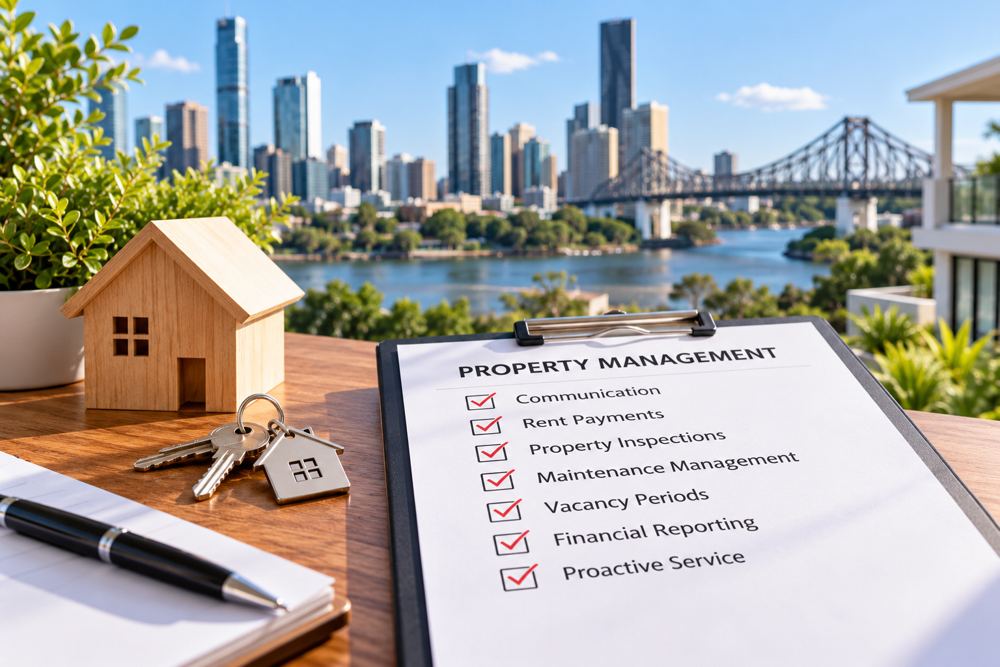
Hiring a property manager should make owning an investment property easier, not more stressful.
A good property manager helps protect your investment, communicates effectively, manages tenants, coordinates maintenance and keeps you informed about your property’s performance.
However, not every property management relationship works as expected.
Some Brisbane landlords find themselves constantly following up on unanswered emails, chasing rental payments, questioning maintenance expenses or worrying about whether their property is being properly looked after.
While occasional mistakes and delays can happen, ongoing management problems may indicate that it is time to reconsider your current arrangements.
Here are seven common questions Brisbane landlords should ask when deciding whether it is time to change their property manager.
1. My property manager rarely responds to my emails or phone calls. Is this a warning sign?
Yes. Poor communication is one of the most common reasons landlords become dissatisfied with their property managers.
While property managers often handle multiple properties and may not always be available immediately, owners should reasonably expect timely responses and regular updates.
Warning signs include:
Emails and phone calls repeatedly going unanswered.
Having to follow up several times for basic information.
Not being informed about important tenancy issues.
Receiving vague answers without clear explanations.
Finding out about problems only after they have become serious.
For routine enquiries, a response within one business day is a reasonable customer service expectation, even if the issue cannot be resolved immediately.
Urgent matters, such as serious maintenance problems or significant tenancy concerns, should receive more immediate attention.
When should you consider changing?
If poor communication has become a consistent pattern, despite raising your concerns, it may be time to look for a property manager who is more responsive and accountable.
2. My tenant is regularly behind in rent, but my property manager doesn’t seem to take action. Should I be concerned?
Absolutely. Managing rental arrears is one of the most important responsibilities of a property manager.
Occasional late payments can happen, but repeated rental arrears should never be ignored.
A proactive property manager should monitor rental payments, follow up promptly when rent becomes overdue and take appropriate action in accordance with Queensland tenancy legislation.
For general residential tenancies in Queensland, a Notice to Remedy Breach (Form 11) can generally be issued when a tenant is more than seven days behind in rent.
Warning signs include:
Rent regularly falling behind without proper follow-up.
The owner discovering arrears before the property manager reports them.
No clear explanation of what action has been taken.
Repeated late payments without a consistent management approach.
Failure to follow the appropriate legal procedures when required.
When should you consider changing?
If your property manager consistently fails to monitor rental payments, communicate arrears or take appropriate action, your rental income may be exposed to unnecessary financial risk.
A good property manager cannot guarantee that every tenant will pay on time, but they should have a clear and consistent process for managing arrears.
3. My property manager doesn’t conduct regular inspections or provide detailed reports. Is this acceptable?
Routine property inspections are an important part of protecting a rental property.
They help identify maintenance issues, monitor the property’s general condition and detect potential problems before they become more expensive.
As a general property management practice, routine inspections are commonly conducted every three to four months, depending on the property’s circumstances and management arrangements.
However, the quality of an inspection matters just as much as its frequency.
Warning signs include:
Routine inspections being repeatedly delayed or missed without explanation.
Inspection reports containing very little useful information.
No photographs or meaningful comments about the property’s condition.
Maintenance concerns being overlooked.
Previously identified problems not being followed up.
A useful inspection report should provide the owner with a clear understanding of the property’s condition, including any maintenance concerns or matters requiring attention.
When should you consider changing?
If you repeatedly receive incomplete reports or cannot obtain reliable information about your property’s condition, it may indicate that your investment is not receiving adequate attention.
4. Maintenance requests take too long, or I keep receiving unexpected repair bills. Is this a problem?
Maintenance management requires a balance between protecting the property, meeting legal obligations and controlling unnecessary expenses.
A professional property manager should respond appropriately to maintenance requests, arrange suitable contractors and keep owners informed about significant repairs and costs.
In Queensland, property owners have legal obligations regarding property maintenance and repairs, including specific requirements for emergency repairs.
Warning signs include:
Maintenance requests being ignored or repeatedly delayed.
Small problems becoming expensive because they were not addressed early.
Repairs being arranged without appropriate communication or authorisation.
Unexpected invoices without sufficient explanation.
Repeated repairs for the same issue without investigating the underlying cause.
Difficulty obtaining invoices or details of completed work.
Not every repair can wait for owner approval, particularly where emergency repairs or legal obligations are involved.
However, property managers should communicate clearly and follow the agreed management authority and applicable legal requirements.
When should you consider changing?
If maintenance is consistently poorly coordinated, costs are not properly explained or important repairs are neglected, it may be time to review your property management arrangements.
5. My investment property stays vacant for too long, and my property manager doesn’t seem proactive. Should I change?
A vacant investment property means lost rental income, so effective leasing and marketing are important.
However, vacancy periods can vary depending on market conditions, rental pricing, property presentation and seasonal demand.
A longer vacancy does not automatically mean your property manager is doing a poor job.
The more important question is whether they are actively working to secure a suitable tenant.
Warning signs include:
Poor-quality advertising photographs or incomplete property descriptions.
Delays in advertising the property.
Limited inspection opportunities for prospective tenants.
No feedback following open inspections.
Little discussion about rental pricing or market conditions.
No clear strategy when the property receives limited enquiries.
A proactive property manager should monitor enquiry levels, provide feedback and recommend adjustments where necessary.
When should you consider changing?
If your property remains vacant and your property manager cannot explain the reasons or demonstrate a reasonable leasing strategy, it may be worth considering another agency.
The goal should not simply be to find a tenant quickly, but to secure a suitable tenant at an appropriate market rent.
6. I keep discovering mistakes in my rental statements, invoices or tenancy records. Is this a serious concern?
Accurate financial reporting and record-keeping are essential parts of professional property management.
Landlords rely on their property managers to maintain reliable records of rental income, management fees, maintenance expenses and other property-related transactions.
Occasional administrative mistakes may occur, but repeated errors can create confusion and make it difficult for owners to understand their property’s financial performance.
Warning signs include:
Incorrect rental payments or unexplained deductions.
Duplicate maintenance charges.
Missing invoices or receipts.
Errors in rental statements.
Delays in transferring rental income.
Difficulty obtaining accurate tenancy or financial records.
Owners should be able to request explanations and supporting documents for transactions relating to their property.
When should you consider changing?
If financial errors happen repeatedly, remain unresolved or cannot be properly explained, this may indicate weaknesses in the agency’s accounting procedures or internal management.
Financial transparency is fundamental to a trustworthy property management relationship.
7. I feel like I have to manage my property manager. Is that a sign it’s time to leave?
For many landlords, this is the clearest indication that something is wrong.
One of the main reasons for hiring a property manager is to reduce the time and effort involved in managing an investment property.
If you constantly have to remind your property manager to complete routine tasks, follow up on tenant issues or provide basic information, the service may no longer be delivering the value you expected.
Warning signs include:
Having to remind the property manager about routine inspections.
Repeatedly asking for updates on outstanding maintenance.
Following up on rental arrears yourself.
Checking whether important tenancy matters have been handled.
Feeling uncertain about what is happening at your property.
Spending more time supervising the property manager than you expected.
Property owners should remain involved in important decisions, but they should not need to oversee every routine management task.
When should you consider changing?
If managing your property manager has become a regular responsibility rather than an occasional necessity, it may be time to reconsider whether the current arrangement is working.
A reliable property manager should take initiative, communicate proactively and give you confidence that your investment is being properly managed.
What Should You Do Before Changing Property Managers?
Changing property managers is an important decision, and it is worth taking a few practical steps before making the move.
1. Raise your concerns directly
Explain the problems you have experienced and give your current property manager an opportunity to respond.
Some issues may be resolved through clearer communication or changes to the way your property is managed.
2. Review your management agreement
Check the terms of your existing management agreement, including any notice period, termination provisions or applicable fees.
Do not assume that you can end the agreement immediately without considering its terms.
3. Compare alternative property managers
Before appointing another agency, ask about communication standards, routine inspections, arrears management, maintenance procedures, fees and reporting.
Choosing a new property manager should be based on service quality and suitability, not simply the lowest management fee.
4. Plan a smooth handover
If you decide to change agencies, ensure that tenancy agreements, rental records, bond information, inspection reports, keys and other relevant documents are properly transferred. We can always contact previous agent for a smooth handover by following the standard transfering process in the industry, without owner's involing. The transition will be coordinated carefully to minimise disruption for both the owner and the tenant.
Final Thoughts
A good property manager should provide more than basic rent collection.
They should help protect your investment, manage problems proactively, maintain accurate records and keep you informed.
No property manager can prevent every maintenance issue, late rental payment or unexpected problem.
However, there is an important difference between occasional challenges and a consistent pattern of poor management.
If you regularly experience communication problems, unresolved maintenance issues, inadequate inspections, financial errors or a lack of accountability, it may be time to review your current property management arrangements.
Ultimately, the right property manager should give you greater confidence in your investment, not more reasons to worry about it.

