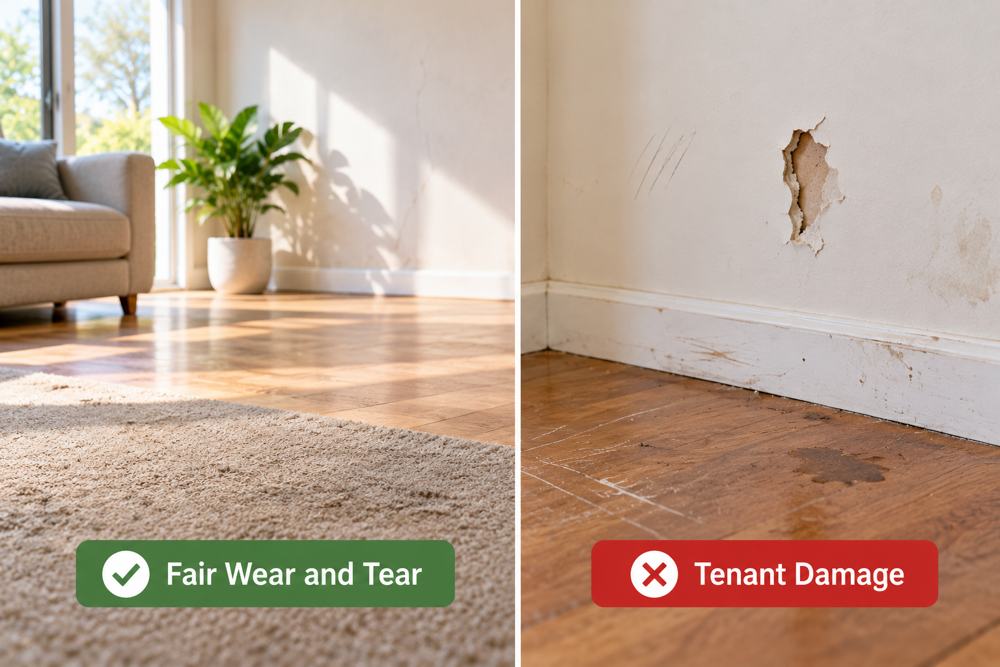
Understanding the difference between fair wear and tear and tenant damage is important for landlords in Queensland. It helps property owners manage maintenance costs, understand their responsibilities and avoid unnecessary disputes with tenants.
Under Queensland tenancy laws, tenants are generally required to return a rental property in substantially the same condition as when they moved in, allowing for fair wear and tear.
However, not every mark, scratch or sign of deterioration is considered tenant damage.
Here are ten common questions Queensland landlords should understand.
1. What Is Fair Wear and Tear?
Fair wear and tear refers to the natural deterioration of a rental property caused by normal everyday use, ageing and environmental conditions.
Even when tenants take reasonable care of a property, some deterioration is unavoidable over time.
Common examples include:
Carpets becoming worn or flattened from normal foot traffic.
Paint fading due to sunlight.
Curtains fading from prolonged sun exposure.
Minor wall cracks caused by natural building movement.
Garden mulch gradually breaking down over time.
Timber flooring showing gradual wear from normal use.
These changes are generally considered fair wear and tear rather than tenant damage.
2. What Is Not Considered Fair Wear and Tear?
Damage caused by carelessness, negligence, misuse or accidents is generally not considered fair wear and tear.
Examples include:
Large stains or burns on carpets.
Deep scratches on timber floors caused by dragging furniture.
Significant holes or damage to walls.
Broken windows caused by careless handling.
Cuts or deep scratches on kitchen benchtops.
Damage caused by pets, including scratched doors or stained carpets.
Paint discolouration caused by candle smoke.
Excessive dirt, grease and grime resulting from inadequate cleaning may also fall outside fair wear and tear.
The key consideration is whether the deterioration resulted from reasonable everyday use or avoidable damage.
3. Who Is Responsible for Repairs Caused by Fair Wear and Tear?
In Queensland, landlords are generally responsible for repairs resulting from fair wear and tear.
For example:
Worn Carpets
If a carpet gradually becomes worn after years of normal use, the landlord is generally responsible for replacing it when replacement becomes necessary.
However, if a tenant causes significant stains or burns, the tenant may be responsible for the resulting damage.
Broken Windows
If a window breaks because its frame has deteriorated with age, the landlord would generally be responsible.
If a tenant breaks the window through careless handling, the tenant may be responsible.
Blocked Drains
If a drain becomes blocked by tree roots or deteriorating pipes, the landlord is generally responsible.
If a blockage is caused by inappropriate items being flushed down the drain, the tenant may be responsible for the resulting costs.
Responsibility depends on the cause of the problem rather than simply when it occurred.
A property manager can assist landlords by reviewing inspection records, communicating with tenants and obtaining advice from qualified tradespeople where necessary.
This helps establish the likely cause of the damage and determine the appropriate course of action.
4. Does a Landlord Have to Replace Everything That Shows Signs of Wear?
No.
Fair wear and tear does not automatically mean an item must be repaired or replaced immediately.
For example, a carpet may show signs of ageing but still be functional and suitable for normal use.
However, landlords must maintain their rental properties in good repair and ensure they meet Queensland’s minimum housing standards.
If deterioration affects safety, functionality or compliance with required standards, repairs or replacement may be necessary.
Regular maintenance can help prevent minor issues from becoming more expensive problems.
5. Can a Landlord Charge a Tenant the Full Replacement Cost of a Damaged Item?
Not necessarily.
When a tenant causes damage beyond fair wear and tear, the landlord may be entitled to reasonable compensation.
However, the age, original condition and remaining useful life of the damaged item should be considered.
For example, if a tenant significantly damages a carpet that has already been used for many years, it may not be reasonable to charge the tenant the full cost of installing a brand-new carpet.
Doing so could place the landlord in a better position than before the damage occurred.
Compensation should reflect the actual loss, taking into account the relevant circumstances and available evidence.
There is no single depreciation rate that automatically applies to every item in a rental property.
A property manager can assist landlords by reviewing the item’s condition, obtaining repair or replacement quotes and assessing a reasonable compensation claim.
6. What Should Landlords Do When Property Damage Is Discovered During a Tenancy?
When damage is identified during a routine inspection or reported by a tenant, the first step is to establish the likely cause.
A property manager can assist landlords with the following process:
1. Document the Damage
Take clear photographs and record the location, nature and extent of the damage.
2. Review Previous Inspection Records
Compare the current condition with the Entry Condition Report and previous routine inspection photographs.
3. Assess the Likely Cause
Determine whether the issue appears to result from normal ageing, maintenance requirements or tenant damage.
4. Communicate with the Tenant
Obtain relevant information from the tenant before making a decision about responsibility.
5. Arrange Necessary Repairs
Coordinate repairs according to the urgency of the issue, applicable tenancy requirements and the landlord’s authorisation.
6. Maintain Accurate Records
Keep photographs, correspondence, repair invoices and contractor reports for future reference.
Where responsibility is unclear, an assessment from a qualified tradesperson may help identify the cause.
Proper documentation not only assists with current maintenance decisions but can also provide important evidence if a dispute arises later.
7. How Is Fair Wear and Tear Assessed at the End of a Tenancy?
At the end of a tenancy, the property’s condition should be compared with its condition at the beginning.
The Entry Condition Report (Form 1a) and Exit Condition Report (Form 14a) are important documents in this process.
For example, if a wall was freshly painted when a tenant moved in but shows reasonable fading after several years, this would generally be considered fair wear and tear.
However, significant holes, avoidable damage or excessive staining may be treated differently.
When assessing the property’s condition, landlords should consider:
The original condition of the property.
The length of the tenancy.
The age and condition of the affected item.
Whether the deterioration is consistent with normal use.
Whether there is evidence of negligence or misuse.
A property manager can assist by conducting a detailed exit inspection, comparing entry and exit condition reports, identifying potential tenant damage and communicating any concerns to the tenant.
Clear photographs and accurate inspection records are particularly valuable when determining whether compensation may be justified.
8. Can a Landlord Deduct Fair Wear and Tear from the Rental Bond?
No.
Fair wear and tear is not a valid reason to claim compensation from a tenant’s rental bond.
However, landlords may seek compensation for damage beyond fair wear and tear where the claim is reasonable and supported by evidence.
Before making a bond claim, landlords should carefully compare the entry and exit condition reports and consider the age and previous condition of the affected items.
Under Queensland’s rental bond rules, supporting evidence must be provided to the tenant within the required timeframe when a landlord or property manager makes or disputes a bond refund claim.
A property manager can assist landlords by:
Reviewing entry and exit condition reports.
Gathering photographs and other supporting evidence.
Obtaining relevant repair quotes or invoices.
Communicating with tenants about proposed compensation.
Assisting with the bond refund or dispute process through the Residential Tenancies Authority (RTA).
If an agreement cannot be reached, the parties may use the RTA’s dispute resolution process.
Following the correct procedures and maintaining clear evidence can help landlords pursue reasonable claims while reducing unnecessary disputes.
9. How Can Landlords Reduce Disputes About Fair Wear and Tear?
Good documentation, regular inspections and timely maintenance are among the most effective ways to reduce disputes.
Professional property management plays an important role in these areas.
Detailed Entry Condition Reports
Accurately documenting the property’s condition before a tenancy begins, including clear photographs of walls, flooring, carpets, appliances and fixtures.
Regular Routine Inspections
Conducting inspections in accordance with Queensland tenancy laws to identify maintenance concerns and potential damage before problems become more serious.
Timely Tenant Communication
Following up on maintenance issues, discussing concerns with tenants and reminding them of their responsibilities where appropriate.
Maintenance Coordination
Arranging suitable tradespeople, obtaining quotes where required and helping landlords make informed decisions about repairs.
Accurate Property Records
Maintaining records of repairs, replacements and improvements to assist with future maintenance decisions and damage assessments.
Thorough Exit Inspections
Carefully comparing entry and exit condition reports to distinguish fair wear and tear from potential tenant damage.
These ongoing management practices help protect the property’s condition, support reasonable maintenance decisions and reduce the likelihood of disputes.
10. Why Is Understanding Fair Wear and Tear Important for Landlords?
Rental properties naturally deteriorate over time, regardless of how carefully tenants use them.
Understanding fair wear and tear helps landlords make realistic maintenance decisions, budget for future repairs and manage tenancy matters fairly.
It also reduces the risk of unnecessary disputes over repair costs and rental bond claims.
The key principle is that landlords are generally responsible for normal ageing and deterioration, while tenants may be responsible for damage they cause beyond fair wear and tear.
In practice, distinguishing between normal deterioration and tenant damage is not always straightforward.
Experienced property managers can assist landlords through detailed inspections, accurate record-keeping, timely maintenance coordination and appropriate handling of bond claims and disputes.
Effective property management is not simply about responding to problems when they arise. It also involves identifying potential issues early, maintaining reliable records and helping property owners protect their investment over the long term.
This article provides general information about residential tenancies in Queensland. Responsibility for repairs and compensation depends on the circumstances, available evidence and applicable tenancy laws. For further guidance, refer to the Residential Tenancies Authority (RTA).

